
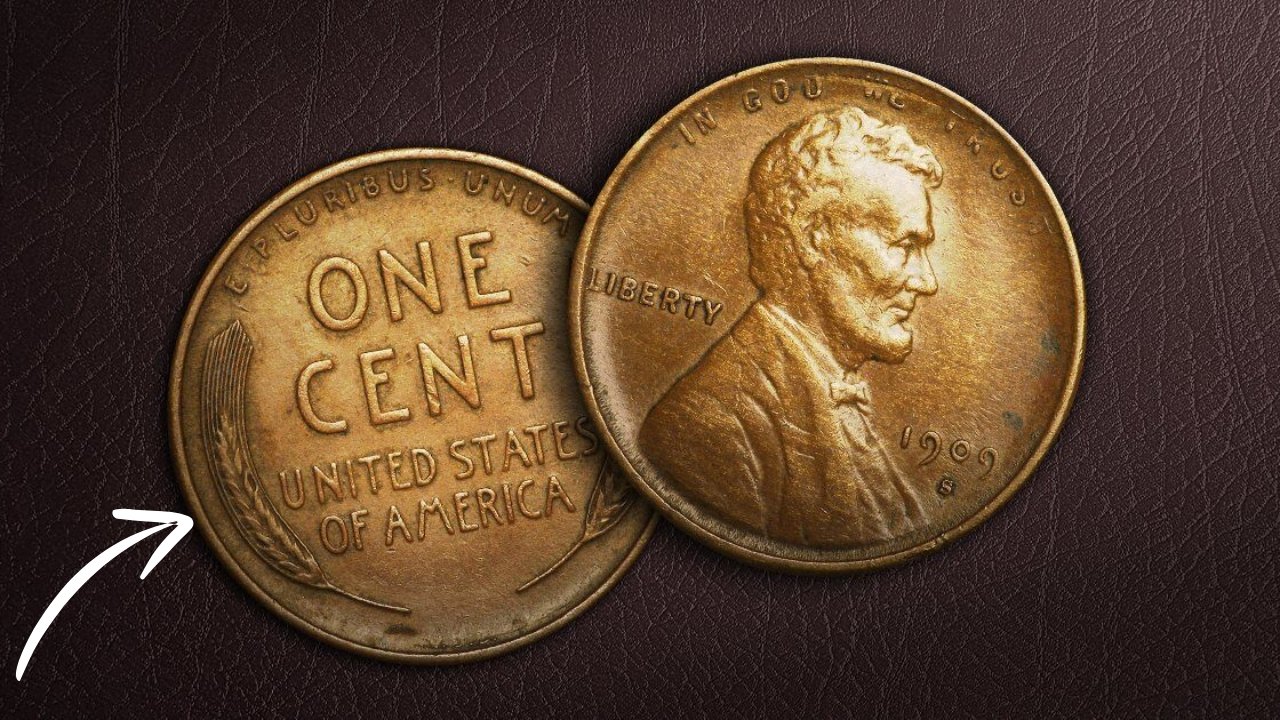
Rare Lincoln Wheat Penny : Ever pulled a dusty old penny from a drawer and wondered if it’s hiding a fortune? In the buzzing world of US numismatics, Lincoln Wheat Pennies from 1909 to 1958 keep collectors on edge, especially these five rare gems fetching top dollar at auctions.
The Iconic 1909-S VDB: First and Fiercest
Picture this: the very first year of Lincoln cents, and the San Francisco mint stamps out just 484,000 with Victor David Brenner’s initials on the back—VDB for short. Public outcry over those designer marks led to quick changes, making this coin a one-year wonder that’s tough to snag in top shape.
Beat-up examples still pull $700 to $800 in good condition, but gem uncirculated ones with red luster? They soar past $1,800, with a jaw-dropping MS-67 RD selling for $307,000 at auction. Folks hunting estate sales or grandma’s jars hit paydirt here, as even flawed pieces draw bids.
1914-D: Denver’s Low-Mintage Marvel
Denver cranked out only 1.193 million of these in 1914, turning it into a “key date” that savvy collectors chase hard. That tiny production run means survivors in mint state are scarce as hen’s teeth.
In average circulated grades, expect $180 to $300, but extra fine jumps to $750, and uncirculated beauties hit $1,800 to $5,500 or more. High-end sales have topped $330,000 for pristine examples, proving condition is king in this hot market.
1922 No D: The Sneaky Missing Mint Mark
Here’s a wild one—Philadelphia mints 7 million, but a worn die erases the “D” mint mark on some, creating the ultra-rare “No D” variety. Strong reverse versions are the real prizes, with maybe a few hundred known.
Weak versions go for $375 to $3,000, but strong reverses demand $1,350 to $25,000 in fine to uncirculated grades, with uncirculated rarities pushing into five figures. Recent buzz has collectors double-checking change jars, as these errors slip into circulation unnoticed.
1931-S: Depression-Era Scarcity
San Francisco barely hit 866,000 during the Great Depression’s grip, when coin demand tanked and mints slashed output. This low-mintage survivor stands out among semi-key dates.
Circulated pieces fetch $100 to $225, but uncirculated jumps to higher stakes, with red gems drawing premium bids. It’s a solid mid-range rarity that rounds out collections without breaking the bank—yet.
1943 Bronze: Wartime Freak of Nature
World War II forced steel pennies to save copper, but a handful of bronze planchets slipped through, creating million-dollar mistakes—maybe 20-30 total across mints. The 1943-D bronze fetched $1.7 million in top grade!
Even worn examples command $100,000+, with AU58BN sales at $282,000 and higher grades exploding values. Spot the copper shine amid silvery steel cents, and you’ve got a holy grail.
Why Rare Lincoln Wheat Penny Pack a Punch Today
Market trends show values climbing in 2026, fueled by online auctions and shows where fresh finds spark bidding wars. PCGS and NGC grading boosts prices, turning pocket change into retirement funds. Rarity, history, and condition drive it all—check yours under magnification!
Also Read this – Rare Washington Quarters Value in USA is a huge amount of USD – Still in Circulation
In conclusion, these five Lincoln Wheat Pennies remind us everyday coins can hold extraordinary stories and value. Dust off that jar, hit a coin shop, or dive into auctions—you might uncover the next big score in America’s numismatic gold rush.